
Video content without subtitles leaves money on the table. Marketing teams producing weekly tutorials face a choice: spend 4-6 hours manually transcribing each video, or adopt AI-powered tools that process the same content in minutes. The difference isn’t just speed—automated subtitle generation unlocks multilingual reach, improves accessibility compliance, and frees production teams to focus on content quality rather than administrative transcription. Understanding how AI transforms this workflow determines whether your video strategy scales or stalls.
The subtitle automation market reflects this urgency. As measured by the 2026 Market.us subtitle market report, the AI-powered subtitle generator sector reached USD 817.6 million in 2025 and projects growth to USD 18,225.7 million by 2035 at a 36.4% compound annual rate. This explosive expansion signals a fundamental shift in video production economics—manual transcription models can no longer sustain the volume and multilingual demands of modern content strategies.
For marketing teams managing weekly video output, the practical question isn’t whether to automate subtitles, but how to implement automation whilst maintaining accuracy standards. The trade-offs between speed, cost, and quality determine which approach fits specific workflow constraints. Understanding these dynamics requires examining how AI actually processes video audio, what accuracy levels are achievable, and where human review remains essential.
- AI processes 60 minutes of video in under 5 minutes compared to 4-6 hours for manual transcription
- Accuracy rates of 90-98% for clear audio reduce review time whilst maintaining professional standards
- Support for 100+ languages enables global content scaling without translation delays
- Automated time synchronisation eliminates tedious timestamp adjustments
- Manual review remains essential for technical terminology and brand-critical accuracy
How AI Transforms Video Subtitle Creation?
The fundamental breakthrough is processing speed. Market research from 2026 confirms that AI systems generate subtitles in minutes, whilst manual transcription requires hours or even days. Some platforms now process one hour of video in under 5 minutes—a 95% time reduction that fundamentally changes production economics.
5 minutes
AI processing time for 60 minutes of video vs 4-6 hours manual transcription
Automatic speech recognition (ASR) technology drives this efficiency. ASR engines analyse audio waveforms, identify speech patterns, and convert spoken words to text whilst simultaneously calculating timestamp synchronisation. Modern neural networks recognise context, distinguish between similar-sounding words, and handle overlapping speech—tasks that previously required human judgement.
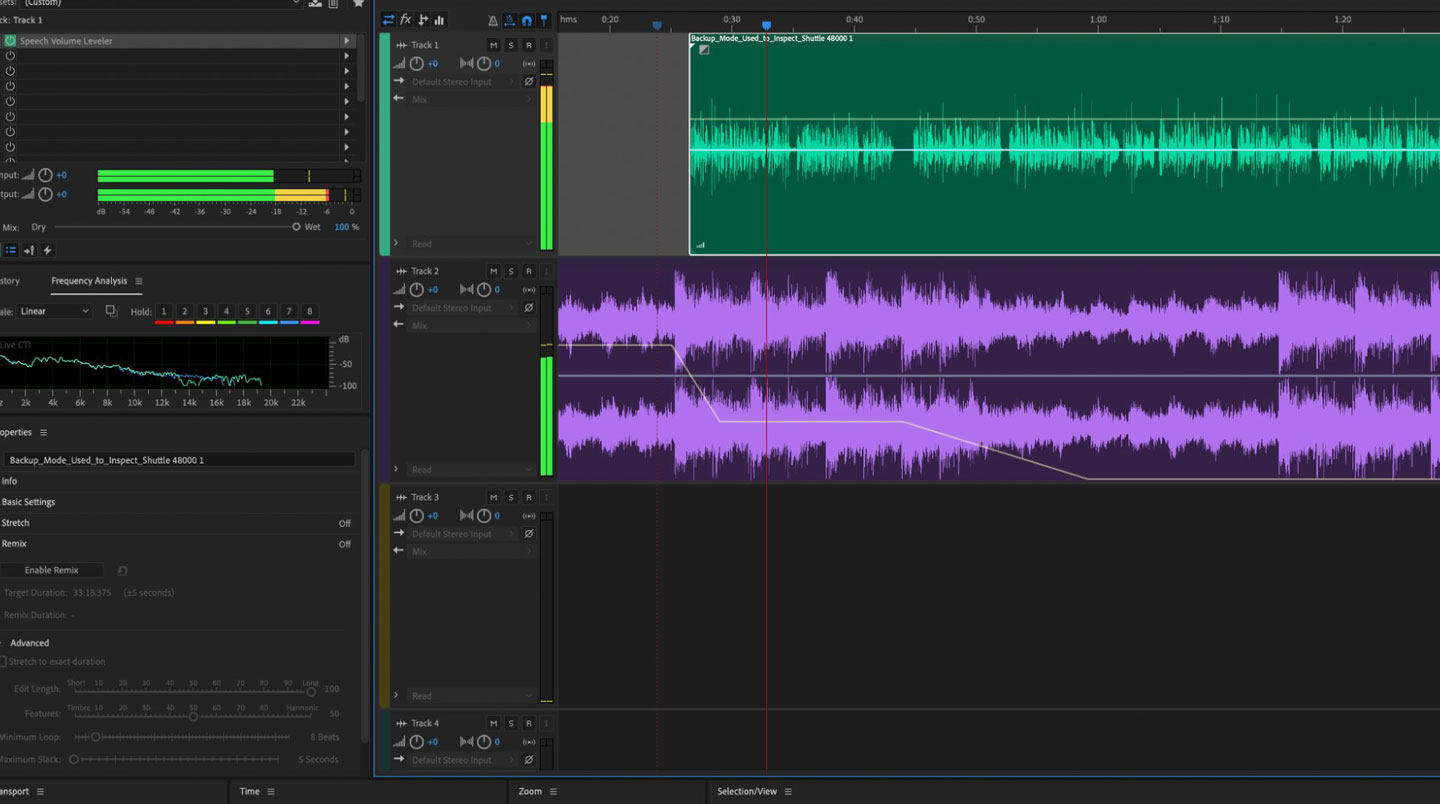
Accuracy levels vary by audio conditions. Modern AI subtitle engines achieve 90-98% accuracy for clear audio in widely spoken languages. Background noise, heavy accents, and technical jargon reduce precision.
Research from Trinity College Dublin demonstrates that correcting an ASR transcription is up to 30% faster than transcribing from scratch, provided the Word Error Rate stays below 30%. This efficiency advantage holds even when manual corrections are necessary, fundamentally changing the cost-benefit calculation for subtitle production.
Take a marketing team producing weekly video tutorials. Manual subtitle creation delays publication by 2-3 days per video, limiting output to 4 videos monthly instead of a target of 12. AI subtitle tools reduce transcription time from 4 hours to 15 minutes per video, enabling same-day publication with a 10-minute review process. The workflow shift isn’t just faster—it removes the publication bottleneck entirely.
Why Marketing Teams Choose Automated Subtitle Solutions?
Three factors drive adoption: workflow velocity, multilingual scalability, and measurable engagement impact. Consider the alternative—hiring transcription services at per-minute rates, waiting 3-5 business days for delivery, then discovering timing errors that require re-submission. Automation collapses this cycle into a single production session.
Platforms that generate automatic subtitles with AI-powered features now support 100+ languages with automatic translation capabilities. Over 3,000 companies currently use these tools for video content creation, demonstrating proven market validation beyond early-adopter experimentation. The technology has moved from beta testing to production infrastructure.
The engagement data justifies the investment. Adding subtitles can increase video viewership by up to 40%, according to market analysis. Social media platforms autoplay video without sound—subtitles convert passive scrollers into engaged viewers. Search engines index subtitle text, improving video discoverability beyond what metadata alone provides.
An e-learning platform expanding to international markets illustrates the cost dynamics. Translation services for course subtitles cost £0.12 per word across 5 languages, creating an £8,000 monthly translation budget. Automated translation with AI subtitle tools reduces localisation costs by 75%, allowing budget reallocation to content quality improvements whilst maintaining the same output volume.
- Processing speed measured in minutes rather than hours eliminates publication delays
- Automatic translation across 100+ languages removes localisation bottlenecks
- Batch processing capabilities enable scaling entire video libraries efficiently
- Real-time editing interfaces reduce revision cycles from days to minutes
- Accuracy varies between 90-98% depending on audio quality and speaker clarity
- Technical terminology and brand names require manual verification
- Review processes remain necessary for maintaining professional standards
- Learning curve exists for mastering customisation and export options
Evaluating AI Subtitle Tools for Your Workflow
Selection criteria depend on production context. A small team publishing 5 videos monthly has different requirements than an enterprise managing thousands of training videos. The decision framework should match tool capabilities to actual workflow constraints rather than chasing feature lists.
The comparison below breaks down three approaches across five decision factors. Fully automated AI suits high-volume scenarios where speed outweighs perfection. Hybrid workflows combining AI generation with human review balance efficiency and accuracy for professional contexts. Manual transcription remains appropriate for legal content, medical training, or financial advice where accuracy standards are non-negotiable.
Comparative data collected and updated January 2026 based on industry analysis and workflow testing.
| Decision Factor | Fully Automated AI | Hybrid (AI + Review) | Manual Transcription |
|---|---|---|---|
| Processing Speed | Minutes (5 min for 60-min video) | Minutes + 10-15 min review time | 4-6 hours per 60-min video |
| Accuracy Rate | 90-98% (varies by audio quality) | 98%+ after review corrections | 99%+ from experienced transcribers |
| Cost Structure | Fixed subscription cost | Subscription + review labour hours | £1.50-£3.00 per audio minute |
| Scalability | Unlimited batch processing capacity | Limited by review team availability | Severely constrained by transcriber hours |
| Optimal Use Case | High volume, multiple languages, social media | Professional quality requirements, brand content | Legal compliance, medical content, financial advice |
A corporate training department illustrates the scalability advantage. An accessibility audit revealed that 60% of training videos lacked proper captions, creating WCAG compliance risk. Batch subtitle generation processed the entire 200-video library in 3 days, achieving full accessibility compliance with manual review focused on accuracy verification rather than transcription from scratch.
- Verify language support matches your target markets and localisation strategy
- Confirm export formats align with your distribution platforms (SRT, VTT, embedded)
- Test real-time editing interface efficiency for your typical correction workflow
- Evaluate batch processing capabilities against your video production volume
- Assess customisation options for font, colour, and positioning to maintain brand consistency
- Calculate pricing structure fit based on monthly video output rather than per-video costs
Rather than pursuing feature completeness, prioritise workflow integration. The best subtitle tool is the one your team actually uses consistently, not the one with the longest feature list. Video content that scales requires approaches to marketing campaigns without team growth—automation tools only deliver value when they eliminate bottlenecks rather than create new complexity.
Your Questions About AI Subtitle Generation
Are AI-generated subtitles accurate enough for professional use?
AI subtitle accuracy typically ranges from 90-98% depending on audio quality, speaker clarity, and background noise levels. For professional contexts, a brief manual review process ensures accuracy whilst still achieving significant time savings compared to full manual transcription. Research published in ACM Transactions on Accessible Computing confirms that scientific publications report extremely low error rates for controlled conditions, with some ASR results outperforming manual transcription on clean audio datasets. The practical approach combines automated generation with targeted human review focused on technical terminology and brand-critical content.
How long does reviewing AI-generated subtitles actually take?
Review time averages 10-15 minutes for a 10-minute video, compared to 40-60 minutes for manual transcription from scratch. The AI handles time synchronisation automatically, allowing reviewers to focus solely on text accuracy rather than timestamp adjustments. Trinity College Dublin research demonstrates that correcting an ASR transcription is up to 30% faster than creating transcripts manually, provided the Word Error Rate remains below 30%. The efficiency gain comes from validation rather than creation—scanning for errors requires less cognitive effort than generating content from audio.
Can AI subtitle tools handle technical terminology and industry jargon?
AI accuracy on specialised vocabulary depends on the tool’s training data and the frequency of terms in common usage. Widely recognised industry terms are generally captured correctly, but highly specialised terminology, product names, and proprietary concepts may require manual correction. Many advanced tools allow custom vocabulary additions or domain-specific training to improve recognition accuracy over time. The practical workflow involves generating subtitles automatically, then conducting a focused review pass specifically for technical terms rather than reviewing every word.
Do automated subtitles meet accessibility compliance requirements?
AI-generated subtitles can meet WCAG accessibility standards when properly reviewed for accuracy. The W3C Web Accessibility Initiative specifies that ASR-generated captions do not automatically satisfy accessibility requirements unless confirmed to be fully accurate. The key compliance factors are text accuracy, proper time synchronisation, and readability—all achievable with AI tools when appropriate quality assurance processes are implemented. Accessibility regulations in various jurisdictions establish requirements for video captions, making review workflows essential rather than optional for organisations with compliance obligations.
How does automatic translation work for multilingual subtitles?
AI subtitle tools first transcribe the original audio using speech recognition, then apply neural machine translation to generate subtitles in target languages. Translation accuracy is generally high for common language pairs and straightforward content, though cultural nuances, idioms, and marketing messaging may require native speaker review. The workflow advantage is simultaneous multi-language output—one video generates subtitle files for dozens of markets in the same processing time required for a single language, fundamentally changing the economics of international content distribution.
The accessibility dimension extends beyond compliance. Video content reaches broader audiences when subtitles accommodate hearing-impaired viewers, non-native speakers, and sound-off mobile consumption. Automation removes the excuse that subtitle creation is too time-consuming—the question shifts from whether to add subtitles to how to optimise their quality and impact. Beyond technical implementation, subtitle improvements contribute to broader video performance strategies. Discover approaches to increase conversion rates systematically by optimising every element of your video content workflow.
- Test AI subtitle generation on 3-5 representative videos to establish baseline accuracy for your content
- Document review time required per video to calculate realistic workflow capacity
- Create a custom vocabulary list of brand names and technical terms for improved recognition
- Establish quality standards defining acceptable accuracy thresholds for different content types
- Integrate subtitle generation into your standard production checklist rather than treating it as optional
The fundamental shift is treating subtitles as standard output rather than optional enhancement. AI automation removes the production barrier that previously made subtitles prohibitively expensive for routine content. Teams that adopt this mindset gain competitive advantage—their video content reaches more viewers, performs better in search, and meets accessibility standards that competitors still treat as aspirational.